
Ecommerce Fulfilment Singapore (2026): The Complete Guide for Shopee, Lazada & Shopify Sellers
=== POST 720 FULL CONTENT ===
Singapore’s Most Accountable 3PL
BrickHub — Storage from $100/CBM · Pick & Pack from $2/order · Delivery from $2.90
Singapore’s ecommerce market hit US$5.04 billion in 2024, and with 98.4% internet penetration, the competition for fast, accurate delivery has never been tighter. For sellers scaling past the point where self-fulfilment makes sense, outsourcing to a professional 3PL is no longer a luxury — it’s a strategic necessity. BrickHub, based at Trade Hub 21 in Boon Lay, offers end-to-end ecommerce fulfilment in Singapore with transparent pricing, zero WMS fees, and native integration across every major local platform.
- Professional 3PL fulfilment in Singapore typically costs $100/CBM/month for storage, $2–$4 per pick-and-pack, and from $2.90 per delivery.
- BrickHub integrates natively with Shopee, Lazada, TikTok Shop, Shopify, Amazon Fresh, and Zalora — orders sync automatically without manual intervention.
- Barcode-verified picking and a no-throw handling policy keep error rates near zero and returns minimal.
- Operating seven days a week from Trade Hub 21, Boon Lay, BrickHub dispatches orders regardless of weekends or public holidays.
- There are no WMS or software fees — you pay only for storage used, orders picked, and deliveries made.
Singapore ecommerce reached US$5.04B in 2024, with Shopee alone hosting over 2 million active sellers across Southeast Asia.
Most Singapore sellers reach the same inflection point: the back bedroom is full of stock, weekends disappear into packing runs, and a single spike in orders exposes just how fragile a solo fulfilment operation really is. Outsourcing fixes the ceiling — but only if you choose a partner whose pricing is honest, whose systems talk to your sales channels, and whose staff actually care whether your customers receive an undamaged box. That last point matters more than it sounds. This guide explains what good ecommerce fulfilment looks like in Singapore and why BrickHub is where serious sellers end up.
Why Singapore Sellers Are Outsourcing Fulfilment
The economics of in-house fulfilment deteriorate quietly at first, then all at once. When order volumes are low, doing everything yourself feels efficient. You know where every SKU lives, you pack every box yourself, and you control quality end to end. The problem is that this model scales with your time, not with demand — and time is the one input you cannot buy more of.
Singapore’s warehouse rental market compounds the issue. Industrial space in accessible locations costs considerably more per square metre than comparable facilities in Malaysia or Indonesia, which means a growing seller either over-commits to expensive space or under-provisions and scrambles during peak periods. Add the complexity of managing multiple courier integrations, reconciling daily manifests, handling return parcels, and maintaining SLA compliance across Shopee and Lazada simultaneously, and the true cost of DIY fulfilment becomes very clear very fast.
Third-party logistics providers solve these problems by aggregating volume across multiple clients. Shared warehousing means you pay only for the cubic space you actually use. Established courier partnerships mean you benefit from negotiated rates that individual sellers cannot access. And because fulfilment is the 3PL‘s core business — not a side function bolted onto something else — the operational rigour is simply higher.
What to Look for in a Fulfilment Centre in Singapore
Platform Integration That Actually Works
Shopify fulfilment in Singapore, Shopee fulfilment in Singapore, and Lazada fulfilment in Singapore each have different technical requirements. Shopee’s SLS integration, Lazada’s shipping label flows, TikTok Shop‘s fulfilment API, and Shopify‘s third-party logistics connections are not interchangeable — and a 3PL that handles one well does not automatically handle the others. Before committing to any fulfilment partner, verify that they have live, tested integrations with every channel you sell on, that orders sync automatically rather than via CSV export, and that tracking updates push back to the marketplace in real time. Customer disputes on Shopee and Lazada are frequently triggered by delayed tracking updates, not by delayed parcels — a distinction that matters only if your fulfilment centre gets the data flow right.
Transparent, Predictable Pricing
Hidden fees are endemic in the 3PL industry. Fuel surcharges, peak period levies, minimum monthly commitments, software licensing fees, inbound handling charges, and photo documentation fees can quietly double the effective cost of fulfilment relative to the headline rate. A professional fulfilment partner prices in a way that lets you model unit economics accurately. You should be able to calculate your fulfilment cost per order before you sign anything, and that number should not change without notice.
Accuracy, Handling, and Security Standards
Mispicks and damage are not minor inconveniences — they generate Shopee returns, Lazada disputes, one-star reviews, and the kind of buyer feedback that suppresses your product rankings for weeks. The operational disciplines that prevent them — barcode scanning at pick, double-checking at pack, no-throw handling protocols, CCTV coverage throughout the facility — are not universal across Singapore’s 3PL market. Ask specific questions about error rates, ask to see how returns are processed, and pay attention to whether the warehouse feels like a place that takes physical goods seriously.
How BrickHub’s Fulfilment Model Works
Storage and Inbounding
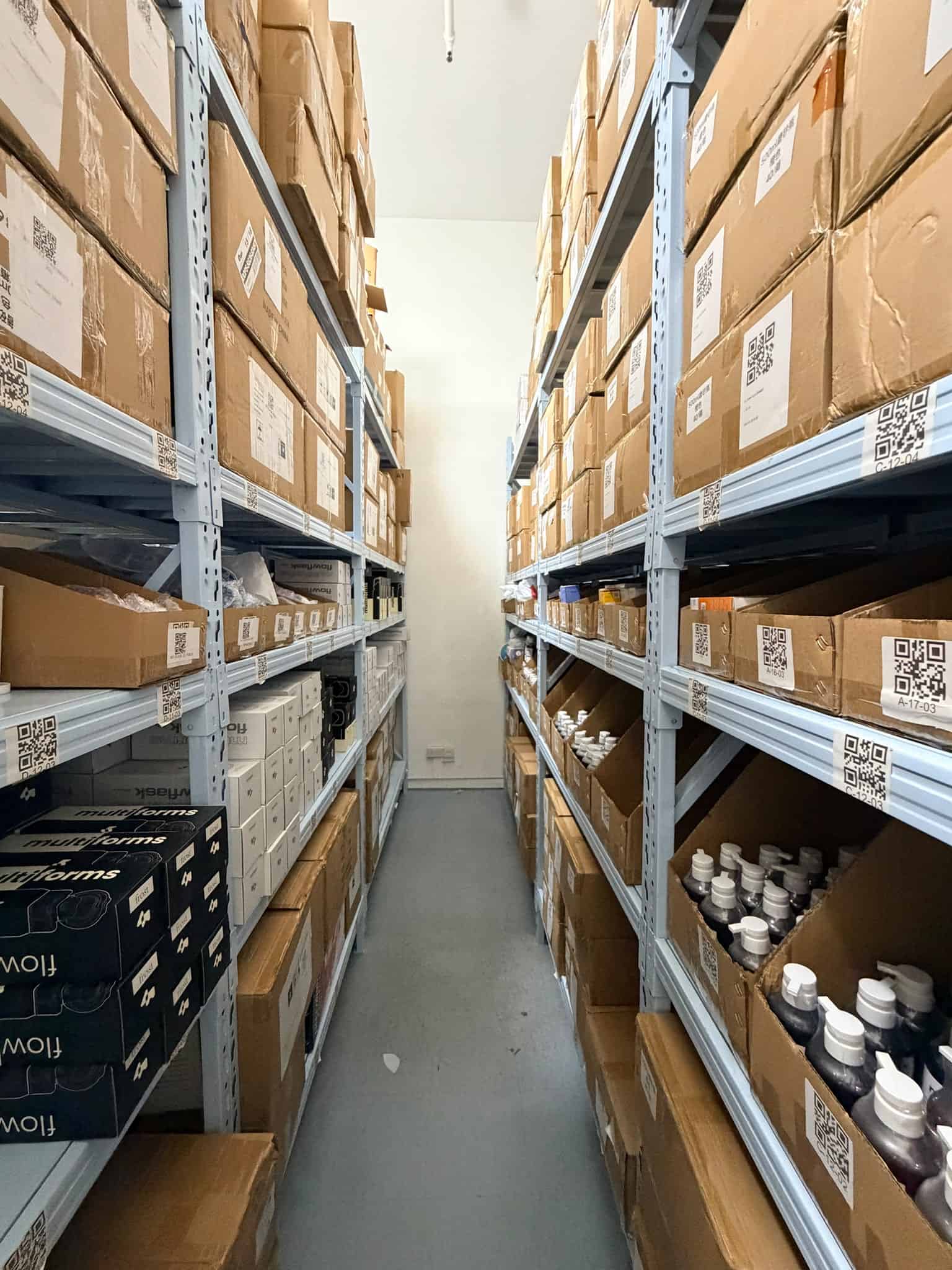
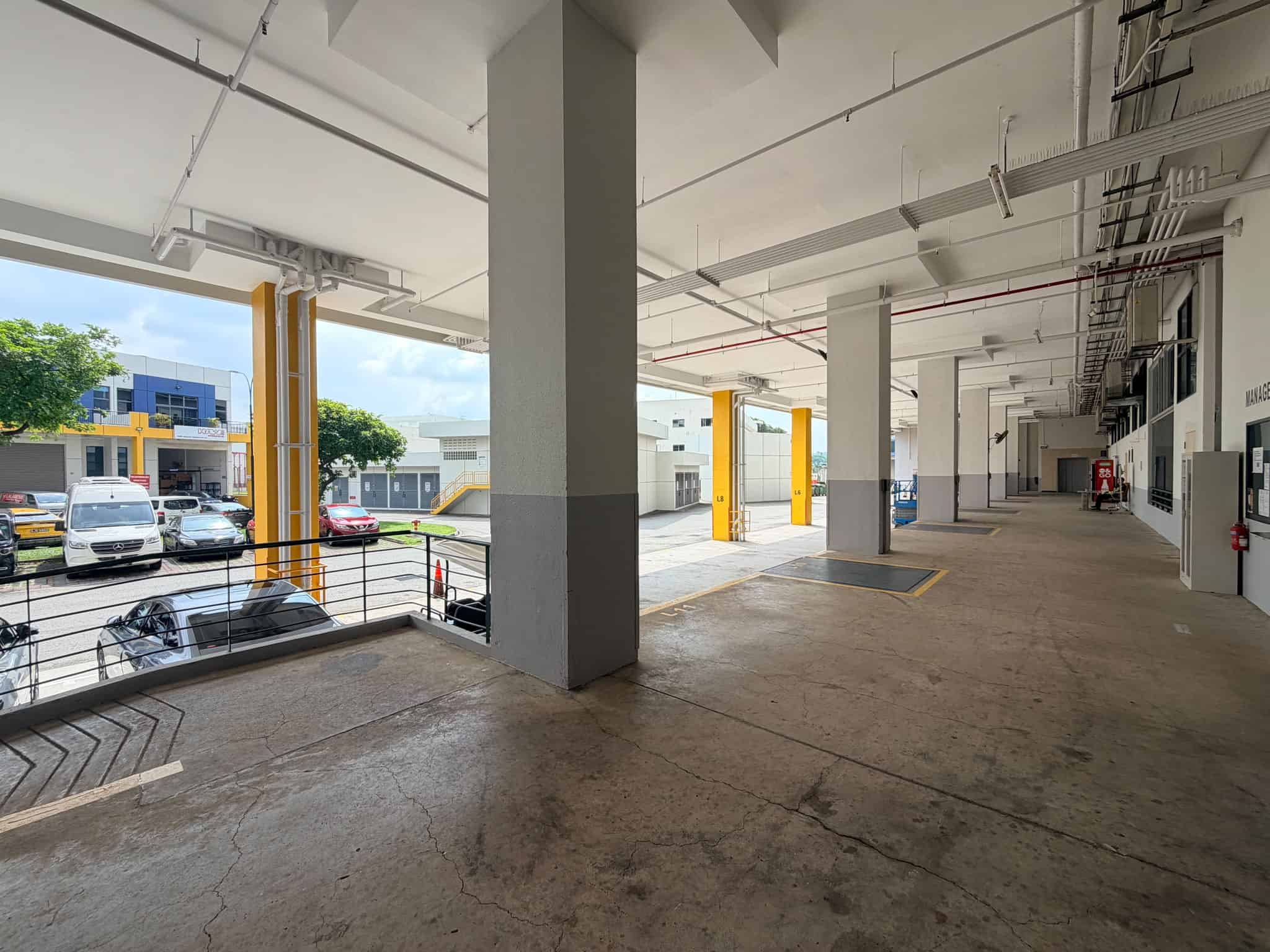
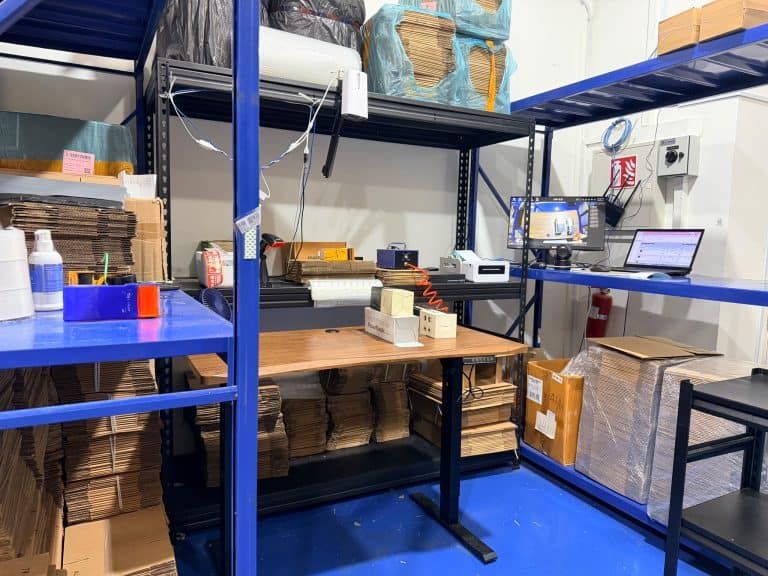
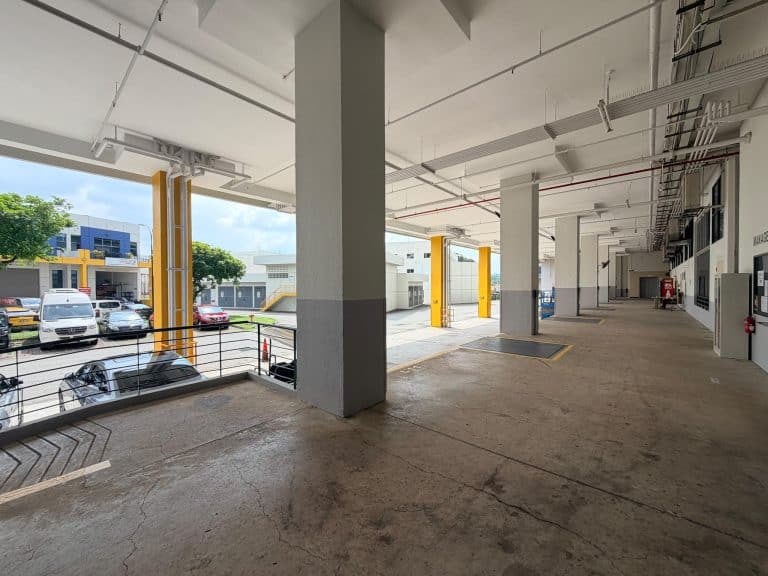
BrickHub’s warehouse at Trade Hub 21 in Boon Lay operates on a CBM-based storage model at $100 per cubic metre per month. There is no minimum volume commitment designed to lock you in at a scale you have not yet reached — you pay for the space your inventory actually occupies. Every inbound shipment is received, counted, and catalogued into BrickHub’s WMS, which is provided at no additional charge. CCTV monitoring covers the facility around the clock, and inventory discrepancies are flagged rather than buried.
Pick, Pack and Dispatch
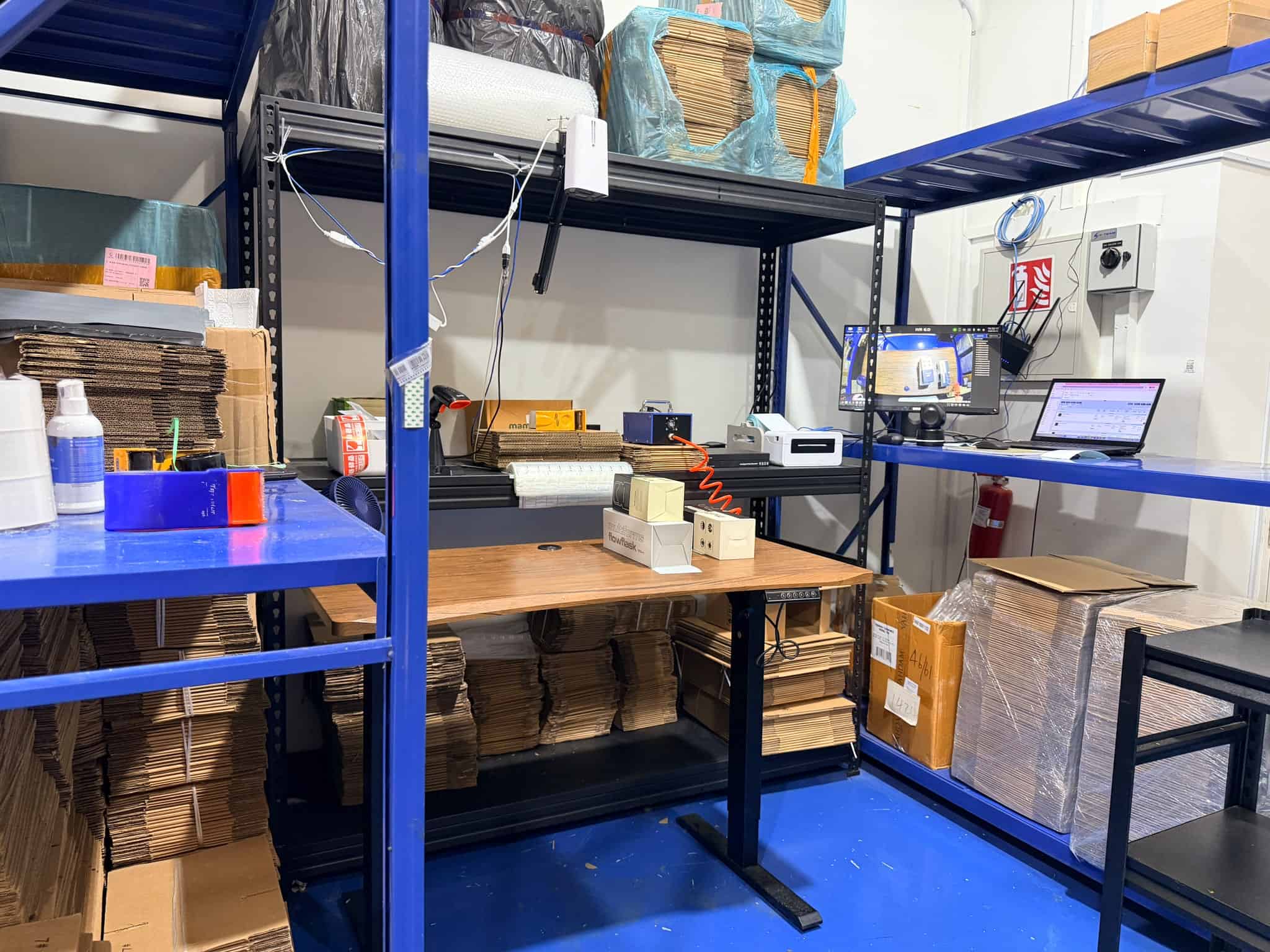
Orders from your connected channels — whether that is your Shopee store, your Lazada listings, your TikTok Shop, your Shopify website, or your Amazon Fresh and Zalora accounts — flow into BrickHub’s system automatically. Each order is picked using barcode verification, which eliminates the guesswork that causes mispick errors in manual fulfilment operations. Packing follows a no-throw protocol: items are handled with consistent care regardless of what the courier’s eventual handling looks like. Pick-and-pack fees start from $2 per order, and delivery rates begin at $2.90, with SPX, J&T, and SingPost For sellers with international or cross-border shipment needs, BrickHub also accommodates DHL, FedEx, and Aramex. available depending on the channel and destination.
Courier Network and Operating Hours
Operating seven days a week means BrickHub dispatches orders on Saturdays and Sundays without the cut-off complications that affect 3PLs running Monday-to-Friday. For Shopee and Lazada sellers, weekend order volumes are frequently the highest of the week — missing Saturday dispatch is not a minor inconvenience, it is a systematic gap in service that accumulates into late ratings and suppressed visibility. BrickHub’s courier relationships with SPX (Shopee’s preferred logistics arm), J&T Express, and SingPost cover the full range of domestic last-mile delivery needs, from standard parcels to bulkier goods requiring dedicated courier handling.
BrickHub vs Other Fulfilment Providers in Singapore
Singapore has several established players in the ecommerce fulfilment space, and a fair comparison is worth making before committing to any of them. Singapore’s push toward SME digitalisation — supported by programmes from Enterprise Singapore — has accelerated demand for scalable, tech-integrated 3PL solutions over the past few years.
Anchant positions itself as a boutique fulfilment and warehousing provider, with a focus on personalised service for smaller sellers. Their model suits brands that prioritise white-glove handling over price efficiency, but sellers with high order volumes or complex multi-channel requirements may find their infrastructure less automated than purpose-built 3PLs. Floship operates predominantly in the cross-border fulfilment space — their strength is international shipping from Hong Kong and global hubs, making them a strong choice for sellers whose primary market is outside Singapore but less optimal for domestic Shopee and Lazada fulfilment. aCommerce is a large-scale enablement partner across Southeast Asia, with enterprise-focused services that extend well beyond pure logistics into brand management and digital retail — which means their pricing and engagement model is typically structured around larger accounts and longer contract terms than most growing Singapore sellers need. Spaceship is a tech-forward courier aggregator rather than a warehousing fulfilment partner; they excel at finding the best rate for a single shipment but do not provide the storage, pick-and-pack, and WMS infrastructure that defines a proper 3PL relationship.
BrickHub occupies a distinct position: a full-service ecommerce 3PL built specifically for Singapore’s marketplace ecosystem, priced accessibly for sellers at growth stage, operating seven days a week, with zero software fees and genuine multi-platform integration.
Disclaimer: The above is a general market overview based on publicly available information. Services, pricing, and positioning change frequently. We recommend verifying directly with each provider before making a decision.
Ready to Hand Off Your Fulfilment?
Scaling an ecommerce business in Singapore without a reliable fulfilment partner is a ceiling, not a strategy. Every hour spent packing boxes, resolving mispick complaints, or managing courier collections is an hour not spent on product development, marketing, or opening new sales channels. BrickHub exists to remove that ceiling — with transparent pricing from $100/CBM/month storage and $2/order fulfilment, native integrations across Shopee, Lazada, TikTok Shop, Shopify, Amazon Fresh, and Zalora, and a seven-day operation that treats your buyers’ expectations as a baseline, not a target.
If you are ready to outsource your ecommerce fulfilment in Singapore to a partner that understands local marketplace dynamics, WhatsApp BrickHub directly to discuss your volumes, channels, and a pricing estimate tailored to your operation.
🏆 Singapore’s Leading Ecommerce Fulfilment Partner — Self Storage, 3PL & Last Mile Delivery | Rated 5⭐ on Google | Trusted by 200+ Singapore Ecommerce Sellers
Frequently Asked Questions
What does ecommerce fulfilment in Singapore typically cost, and what should I expect to pay for storage, pick-and-pack, and delivery?
Professional ecommerce fulfilment in Singapore is generally priced across three components: storage (per cubic metre per month), pick-and-pack (a per-order fee covering labour and materials), and outbound delivery (variable by courier and parcel weight). BrickHub’s rates start at $100/CBM/month for storage, $2 per order for pick-and-pack, and $2.90 per delivery. There are no WMS or software fees.
How does a Singapore fulfilment centre integrate with Shopee, Lazada, and TikTok Shop?
A properly integrated 3PL connects directly to each marketplace’s API or logistics platform — Shopee SLS for Shopee, the Lazada shipping flow for Lazada, and TikTok Shop’s fulfilment API for TikTok. Orders sync automatically, picking and packing is triggered without manual data entry, and tracking numbers push back to the marketplace in real time. BrickHub has live integrations across all three, plus Shopify, WooCommerce, Amazon Fresh, and Zalora.
What happens to my Shopee or Lazada seller rating if I miss dispatch deadlines after outsourcing?
Late dispatch penalties on Shopee and Lazada directly suppress your search visibility and seller rating — effects that can persist for several weeks. A good fulfilment partner eliminates this risk by operating to marketplace cut-off times every day, including weekends. BrickHub operates seven days a week and processes orders to meet Shopee’s 2NDD requirements (dispatch before 10am the next working day).
Is there a minimum order volume to use a 3PL fulfilment service in Singapore?
Some 3PLs impose minimum monthly order counts or minimum storage commitments. BrickHub does not require a minimum order volume to get started — you can begin at any scale and grow from there. The pricing model is purely usage-based: you pay for the storage space you use, the orders you fulfil, and the deliveries you send.
How long does it take to set up ecommerce fulfilment with BrickHub in Singapore?
Onboarding typically involves signing a service agreement, completing a product data template, ensuring all items are barcoded, and shipping your opening stock to Trade Hub 21. From stock receipt to first order dispatch, the process generally takes a few working days depending on inbound volume and SKU complexity. WhatsApp BrickHub directly to get a specific timeline for your situation. Barcode standards in Singapore follow GS1 Singapore guidelines, which define the label formats required for smooth fulfilment centre receiving.
Ecommerce Fulfilment Singapore in 2026: What’s Changed for Shopee and TikTok Shop Sellers
The ecommerce fulfilment Singapore landscape has shifted dramatically heading into 2026. TikTok Shop has cemented itself as a genuine revenue channel for Singapore sellers, joining Shopee and Lazada as a platform where SLA compliance directly affects your visibility and sales velocity. That means orders need to ship within tight windows — typically 24 hours or less — or your seller score takes a hit.
Multichannel complexity has also risen sharply. Sellers managing three or more platforms simultaneously find it increasingly difficult to maintain accurate inventory, process orders fast enough, and handle returns cleanly. Manual picking and packing at home simply does not scale once you are pushing 100+ orders a month across platforms.
In 2026, ecommerce fulfilment Singapore providers have responded by deepening their API integrations with TikTok Shop and expanding same-day dispatch windows. BrickHub, for instance, operates a cut-off of 2pm for same-day dispatch — a critical advantage for sellers competing on platform delivery badges and fast shipping filters.
The shift is not just operational. Sellers who outsource ecommerce fulfilment Singapore gain data visibility — real-time stock levels, order tracking, and returns dashboards — that in-house fulfilment at scale rarely provides without significant investment in warehouse management systems.
How to Choose the Right Ecommerce Fulfilment Partner in Singapore
Choosing the right ecommerce fulfilment Singapore partner comes down to four core criteria: SLA guarantees, platform integrations, cost per order, and returns handling.
SLA guarantees matter because platforms like Shopee penalise late shipments. Ask any potential fulfilment partner what their same-day and next-day dispatch rates are, and whether they offer SLA compensation if they miss. A good ecommerce fulfilment Singapore provider will put this in writing.
Platform integrations should cover your current and likely future sales channels. Native connectors to Shopee, Lazada, TikTok Shop, Shopify, and WooCommerce eliminate manual order entry and reduce errors. Confirm whether integration is real-time or batch-synced — real-time matters when stock runs low.
Cost per order is the number most sellers focus on, but it should not be the only one. Factor in storage fees, returns processing, and any minimum monthly charges. At modest volumes, a per-order model suits most sellers best.
Returns handling is frequently overlooked until it becomes a problem. A capable ecommerce fulfilment Singapore partner will inspect returned items, restock sellable stock, and provide a returns report — not simply store boxes in a corner awaiting instruction.
For further guidance on logistics and business development in Singapore, visit Enterprise Singapore Logistics Support.
Ecommerce Fulfilment Singapore in 2026: What’s Changed for Shopee and TikTok Shop Sellers
The ecommerce fulfilment Singapore landscape shifted considerably in 2026. TikTok Shop’s rapid expansion in Southeast Asia brought a surge of Singapore-based sellers who needed reliable, fast-turnaround fulfilment to stay competitive. At the same time, Shopee tightened its SLA requirements, penalising sellers who miss dispatch windows — making in-house logistics increasingly risky for growing brands.
Multichannel complexity is now the norm. Sellers routinely list across Shopee, Lazada, TikTok Shop, and their own Shopify store simultaneously. Managing separate inventory pools for each platform is both error-prone and expensive. A centralised ecommerce fulfilment Singapore provider solves this by holding one unified stock pool and routing orders to each channel automatically.
In 2026, SLA penalties for late dispatch have increased across all major platforms. Sellers relying on manual packing or slow couriers are seeing rating drops and reduced visibility in platform search. Outsourcing to a dedicated ecommerce fulfilment Singapore partner is increasingly the difference between marketplace growth and stagnation.


2 Comments