Customs Clearance Singapore (2026): A Practical Guide for Ecommerce Sellers

Singapore maintains one of the world’s most efficient customs clearance systems, but for ecommerce sellers new to importing and exporting, the process can feel opaque. Understanding how Singapore customs clearance works — the permits, the HS codes, the GST obligations, and the role of your logistics partner — is not optional. It is the operational foundation that determines whether your goods clear in hours or sit in a customs hold for days, accruing storage fees and delaying your customers’ orders.
Quick Answer: Customs Clearance in Singapore
- All commercial imports into Singapore require an import permit submitted via TradeNet — Singapore Customs’ electronic trade portal
- Import GST (currently 9%) applies to most commercial goods entering Singapore — there is no de minimis exemption for B2B commercial shipments
- HS codes (Harmonised System codes) determine the duty rate and any import controls applicable to your product
- A licensed Declaring Agent (typically your freight forwarder or 3PL) submits permits on your behalf
- BrickHub coordinates inbound customs clearance for clients’ stock, ensuring smooth handover from port to warehouse
Whether you are importing stock for your Singapore ecommerce store or exporting goods to overseas customers, understanding the customs process protects you from costly mistakes. This guide covers the Singapore customs clearance process for ecommerce sellers — import procedures, HS codes, GST, common errors, and how a 3PL partner simplifies the entire process.
Singapore Customs: The Regulatory Framework
Singapore Customs is the national authority responsible for trade facilitation and customs enforcement. All import and export declarations in Singapore are processed through TradeNet — a national single-window electronic system through which declarants submit permits, receive approvals, and comply with regulatory requirements across multiple government agencies simultaneously.
Singapore’s trade regulatory framework is designed to be business-friendly. The island processes millions of import and export declarations annually with high automation and relatively fast clearance times. For routine commercial imports with complete and accurate documentation, customs clearance in Singapore typically takes 1–3 business days. For express customs channels used by freight forwarders with clean compliance records, same-day clearance is achievable for straightforward shipments.
What Is TradeNet and How Does It Work for Ecommerce Importers?
TradeNet is Singapore’s integrated trade documentation platform, linking Singapore Customs, the Port of Singapore Authority, Changi Airport, and over 35 government agencies in a single electronic submission system. Every import permit, export permit, and transhipment declaration for goods flowing through Singapore is processed through TradeNet.
As an ecommerce importer, you do not need to interact with TradeNet directly. Your licensed Declaring Agent — typically your freight forwarder or, where applicable, your 3PL partner — submits all customs declarations on your behalf. The Declaring Agent is legally responsible for the accuracy of the declaration and must be registered with Singapore Customs. This is why choosing a compliant, experienced freight forwarder is critical — their declarations appear under their licence, and errors are their regulatory liability as well as yours.
Import Permits and Procedures for Ecommerce Sellers
Every commercial import into Singapore requires an import permit. The standard permit for general commercial goods is a Customs IN permit, which covers most products imported for domestic sale. Controlled goods — including certain food products, health supplements, cosmetics, medical devices, telecommunications equipment, and hazardous materials — require additional approval from the relevant Competent Authority (Singapore Food Agency, Health Sciences Authority, IMDA, etc.) before or alongside the customs permit.
The import permit declaration must include: the HS code for each product, the customs value (typically the CIF value — cost, insurance, and freight to Singapore), the country of origin, the quantity and unit of measurement, and the importer’s UEN (Unique Entity Number) or NRIC for individual importers. Incomplete or inaccurate declarations are the most common cause of customs delays for ecommerce importers.
What Are HS Codes and Why Do They Matter for Ecommerce Imports Into Singapore?
HS codes (Harmonised System codes) are a globally standardised 8-digit classification system for traded goods. Every product imported into Singapore must be classified under the correct HS code, which determines the applicable duty rate (if any), any regulatory controls, and GST treatment. Singapore uses the ASEAN Harmonised Tariff Nomenclature (AHTN), which extends the international 6-digit HS code to 8 digits for Singapore-specific classifications.
Most consumer goods imported into Singapore attract 0% import duty — Singapore is a low-tariff jurisdiction by design as a trade hub. However, using an incorrect HS code can trigger unintended duty liabilities, compliance flags for controlled goods, or difficulties claiming preferential tariff treatment under Singapore’s free trade agreements. For ecommerce brands importing novel product categories, obtaining a formal HS classification ruling from Singapore Customs provides certainty and protects against subsequent reclassification.
GST on Imports: What Singapore Ecommerce Sellers Need to Know
Singapore’s Goods and Services Tax (GST) is currently set at 9% and applies to most commercial imports. For B2B commercial shipments, GST is payable at the point of import — calculated on the CIF value of the goods. GST-registered businesses can subsequently claim this input GST against their output GST liability, effectively making it a cash flow consideration rather than a cost (assuming healthy output tax generation).
For GST-registered ecommerce sellers importing stock for Singapore domestic sale, the import GST process is straightforward: pay GST at import, collect output GST on sales, offset input against output in quarterly GST returns. For ecommerce brands not yet GST-registered (below the SGD 1 million annual turnover threshold), import GST is a direct cost — factor it into your landed cost calculations.
From January 2023, Singapore extended GST to overseas digital services and low-value goods imported via air or post (valued below SGD 400), ending the previous de minimis exemption. This change directly affected overseas dropshipping businesses shipping small parcels to Singapore consumers — all are now subject to GST regardless of parcel value.
Common Customs Clearance Mistakes Made by Ecommerce Sellers in Singapore
The most common errors that cause customs delays and penalties for Singapore ecommerce importers include: undervaluing goods (declaring below CIF value to reduce GST — this is a customs offence with significant penalties); incorrect HS code classification (leading to wrong duty rates or triggering controlled goods requirements); missing or incomplete documentation (commercial invoice, packing list, certificate of origin where required); failing to obtain Competent Authority approval for regulated products before shipment arrives; and importing prohibited goods (certain knives, weapons, controlled substances) without understanding Singapore’s specific restrictions.
How Can an Ecommerce Brand in Singapore Avoid Customs Clearance Delays and Penalties?
Prevention is straightforward: work with an experienced, licensed freight forwarder as your Declaring Agent; ensure all documentation from your supplier is accurate and complete (correct HS codes, true CIF values, proper product descriptions); identify regulated or controlled products in your range before importing; and register your business with Singapore Customs as an importer. For new product categories, request a HS classification ruling from Singapore Customs before your first shipment. The cost of a classification ruling is minimal compared to the cost of a shipment held at port.
How 3PL Partners Handle Customs Clearance for Ecommerce Brands
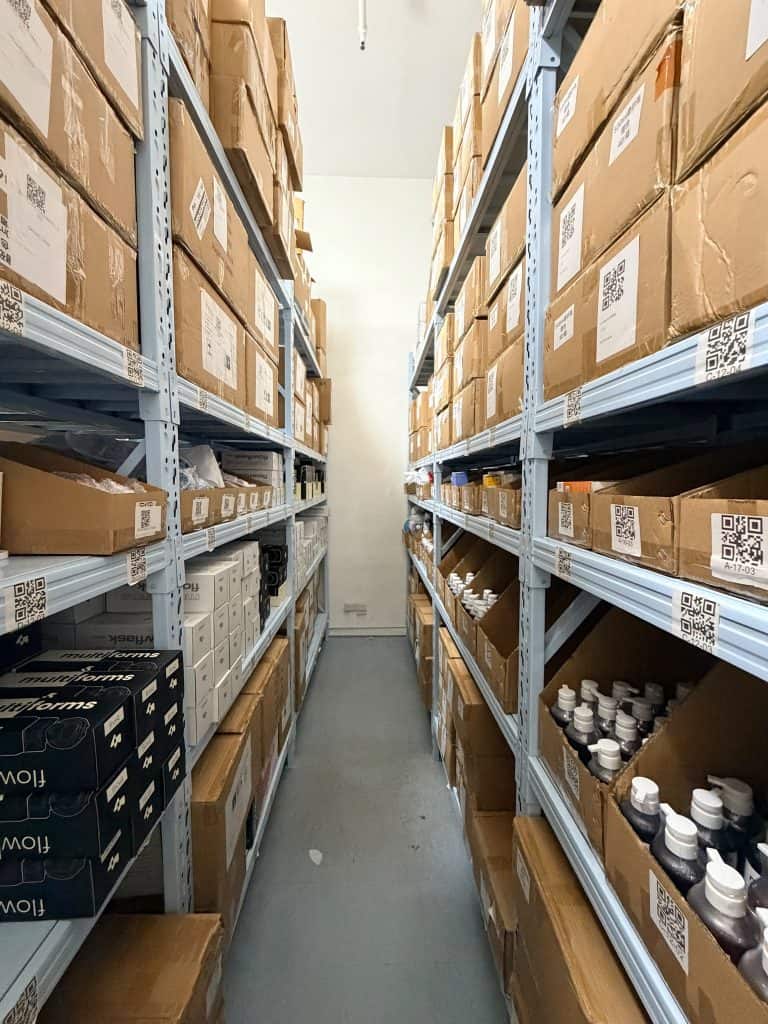
A 3PL partner like BrickHub coordinates the end-to-end inbound logistics process for clients’ stock, including liaising with freight forwarders and customs agents to ensure smooth clearance and timely delivery to the warehouse. When goods arrive at the Port of Singapore or Changi Airport, BrickHub‘s operations team coordinates with the appointed clearing agent to ensure permits are in order, goods are inspected and released, and delivery to the warehouse is scheduled efficiently.
This coordination role is one of the underappreciated operational benefits of a professional 3PL relationship. Rather than managing forwarder communications, customs queries, and port authority interactions yourself, your 3PL partner handles the logistics interfaces that sit between your supplier and your saleable inventory. For ecommerce brands scaling their Singapore operations, this operational simplification is significant. Learn more about BrickHub‘s inbound logistics and 3PL warehousing services.
Exporting From Singapore: Customs Clearance for Outbound Ecommerce Shipments
Ecommerce brands shipping orders from Singapore to overseas customers also navigate customs requirements — both Singapore export procedures and destination country import procedures. Singapore export permits are required for certain controlled goods categories; for most consumer product categories, no export permit is required, though the shipment must comply with destination country import regulations.
For Singapore brands selling cross-border — particularly to Malaysia, Indonesia, Thailand, and the broader ASEAN region — understanding destination country duties, GST/VAT, and import controls is as important as understanding Singapore’s own procedures. Your freight forwarder or 3PL can advise on destination-specific requirements for your product category. BrickHub supports outbound international shipping from Singapore for clients requiring regional fulfilment. Visit BrickHub‘s contact page to discuss your cross-border fulfilment requirements.
BrickHub Singapore
Singapore’s Trusted 3PL Partner
Fulfilment, warehousing, and last mile delivery for ecommerce brands — scale without the overhead.
Customs Clearance Singapore 2026: GST Changes and What Importers Need to Know
2026 marks a stabilisation period following Singapore’s GST increase to 9% in 2024 — but the operational implications for ecommerce importers continue to evolve. For businesses managing customs clearance Singapore for imported goods, understanding the current GST framework is a baseline commercial requirement, not an optional compliance detail.
The most significant change affecting ecommerce importers in recent years is the removal of the GST import relief threshold. Previously, goods imported by post or air with a Customs Value of SGD 400 or below were exempt from GST. This relief was abolished effective January 2023, bringing Singapore in line with international norms. In 2026, all commercial imports — regardless of value — are subject to GST at the point of importation. There is no de minimis exemption for ecommerce goods imported into Singapore. Every parcel, regardless of value, requires correct customs documentation and GST payment.
TradeNet, Singapore Customs’ national trade portal, processes all import and export declarations electronically. In 2026, TradeNet has been further integrated with the NTP (National Trade Platform) ecosystem, improving data sharing between declarants, carriers, and customs authorities. For ecommerce businesses managing high-volume customs clearance Singapore operations, this integration enables faster permit approvals and more predictable clearance timelines. Singapore Customs provides the definitive reference for current GST rates, permit requirements, and TradeNet access. For import logistics context, see freight forwarding Singapore services.
Step-by-Step: How Customs Clearance Works for Ecommerce Parcels in Singapore
For ecommerce brands importing stock into Singapore, understanding the customs clearance Singapore process end-to-end removes uncertainty and enables better supply chain planning. The process is systematic, and with an experienced freight forwarder as your Declaring Agent, it is largely invisible to the merchant — but knowing what happens behind the scenes helps you ask the right questions and avoid preventable delays.
Step 1 — HS Code Classification: Before your goods ship, they must be classified under the correct HS (Harmonised System) code. Singapore uses the ASEAN Harmonised Tariff Nomenclature (AHTN) 8-digit system. Your freight forwarder or Declaring Agent advises on the correct classification. Incorrect HS codes are the most common source of customs delays — they trigger re-examination, potential penalties, and clearance holds that can last days.
Step 2 — Import Permit via TradeNet: Your Declaring Agent submits an import permit application via TradeNet before or upon arrival of the goods. The permit declares the importer, consignee, goods description, HS codes, quantities, and CIF (Cost + Insurance + Freight) value. For most non-controlled goods, TradeNet approves permits within 10–30 minutes electronically.
Step 3 — Duty and GST Payment: Based on the approved permit, import duties (where applicable — most consumer goods attract 0% duty in Singapore) and GST at 9% are assessed against the CIF value. Payment is processed electronically through the TradeNet system.
Step 4 — Physical Clearance and Handoff: Once the permit is approved and payment confirmed, goods are released by the carrier or port authority. Your freight forwarder coordinates collection or delivery to your bonded warehouse Singapore facility or standard 3PL warehouse. With BrickHub, inbound goods from cleared customs move directly into the live inventory system — available for order fulfilment within 24–48 hours of port release.
🏆 Singapore’s Leading Ecommerce Fulfilment Partner — Self Storage, 3PL & Last Mile Delivery | Rated 5⭐ on Google | Trusted by 200+ Singapore Ecommerce Sellers
Conclusion: Customs Compliance Is Not Optional — It Is Competitive Advantage
For Singapore ecommerce brands, customs clearance competence is not just about avoiding penalties. It is about supply chain speed. A brand that clears customs consistently in 1–2 days has faster inbound replenishment cycles, better inventory predictability, and a more responsive supply chain than a competitor that struggles with documentation errors and customs holds. The practical steps — correct HS codes, complete documentation, a licensed Declaring Agent, pre-approval for regulated goods — are not complex, but they require discipline and the right logistics partners.
A professional 3PL like BrickHub brings the operational coordination that ensures your inbound shipments move efficiently from port to warehouse, ready for customer order fulfilment. If you are building or reviewing your Singapore import process, speak with the BrickHub team about how 3PL partnership streamlines your inbound customs and fulfilment operations.
Frequently Asked Questions: Customs Clearance Singapore
How long does customs clearance take in Singapore for ecommerce imports?
For routine commercial imports with complete and accurate documentation, Singapore customs clearance typically takes 1–3 business days. For straightforward shipments handled by freight forwarders with clean compliance records, same-day or next-day clearance is achievable. Delays occur when documentation is incomplete, goods require Competent Authority approval, or declarations are flagged for examination.
What is TradeNet and do I need to use it as an ecommerce importer in Singapore?
TradeNet is Singapore Customs’ electronic single-window trade platform through which all import, export, and transhipment declarations are submitted. As an ecommerce importer, you do not interact with TradeNet directly — your licensed Declaring Agent (freight forwarder) submits all declarations on your behalf. You need to ensure your documentation is accurate so your agent can declare correctly.
How much GST do I pay when importing goods into Singapore for my ecommerce store?
GST is currently 9% in Singapore, applied to the CIF value (cost plus insurance plus freight) of imported commercial goods. GST-registered businesses can claim this as input tax against their output GST liability. Non-GST-registered importers pay import GST as a direct cost. From January 2023, all low-value goods (previously exempt under SGD 400) are also subject to GST.
What are HS codes and how do I find the correct one for my products when importing into Singapore?
HS codes (Harmonised System codes) are an internationally standardised 8-digit product classification system used for customs declarations. Singapore uses the ASEAN Harmonised Tariff Nomenclature (AHTN). You can search for the correct HS code using Singapore Customs’ online tariff finder at customs.gov.sg. For novel or ambiguous products, request a formal classification ruling from Singapore Customs to obtain certainty before your first shipment.
What documents do I need for customs clearance of ecommerce imports into Singapore?
Standard documentation required for Singapore import customs clearance includes: commercial invoice (stating product description, HS code, quantity, unit value, and total CIF value), packing list, bill of lading (sea freight) or airway bill (air freight), and where applicable, a certificate of origin. Controlled goods require additional Competent Authority permits. Your freight forwarder will advise on any product-specific requirements.
What goods are prohibited or restricted for import into Singapore?
Singapore prohibits the import of certain goods including: controlled drugs and psychotropic substances, certain weapons and ammunition, obscene publications, and counterfeit goods. Restricted goods (requiring permits or Competent Authority approval) include: food and food products (SFA approval), health supplements and medicines (HSA approval), telecommunications and IT equipment (IMDA approval), and certain chemicals. Check Singapore Customs’ prohibited and controlled goods list before importing new product categories.
What is a Declaring Agent and do I need one for my ecommerce imports into Singapore?
A Declaring Agent is a company or individual registered with Singapore Customs and authorised to submit import and export declarations via TradeNet on behalf of importers and exporters. For commercial sea freight and air freight shipments, you require a Declaring Agent — typically your freight forwarder. Courier imports (DHL, FedEx, UPS) are handled by the courier’s customs brokerage arm. For a 3PL like BrickHub to receive your goods at the warehouse, clearance must be completed by your appointed agent first.
How does a 3PL help with customs clearance for ecommerce brands importing into Singapore?
A 3PL like BrickHub coordinates the inbound logistics process, liaising with your appointed freight forwarder and customs agent to ensure permits are in order, clearance is completed efficiently, and goods are delivered from port to warehouse on schedule. While the 3PL does not typically act as Declaring Agent, its operational coordination role ensures the customs-to-warehouse handover is smooth — avoiding port storage fees and delays that affect your inventory availability for customer orders.
Customs Clearance Singapore 2026: GST Changes and What Importers Need to Know
Singapore’s GST landscape for importers changed significantly in recent years, and 2026 importers must navigate the current regime carefully to avoid unexpected costs and clearance delays.
As of 2024, Singapore’s GST rate is 9%, applicable to all imported goods regardless of value. The previous low-value goods exemption for imports under SGD 400 was removed — meaning every ecommerce parcel entering Singapore now attracts GST at point of import or at point of supply for overseas vendors registered under the Overseas Vendor Registration (OVR) regime.
For businesses importing goods in bulk, GST is payable on the customs value of the shipment at the time of import permit application. Businesses registered for GST can claim input tax credits on qualifying imports, partially offsetting the liability. Those not yet GST-registered but importing at scale should review whether voluntary registration is now beneficial.
All customs documentation must be filed electronically through TradeNet, Singapore’s customs permit system. Most freight forwarders and 3PLs file permits on behalf of their clients as part of a managed customs clearance Singapore service. Visit Singapore Customs for the latest tariff classifications and permit requirements.
Step-by-Step: How Customs Clearance Works for Ecommerce Parcels in Singapore
For ecommerce sellers importing inventory into Singapore, understanding the customs clearance process removes uncertainty and helps you plan lead times accurately. Here is how the process works from shipment departure to warehouse delivery.
Step 1 — Pre-arrival documentation. Before your shipment arrives, your freight forwarder prepares the import permit application in TradeNet. This requires a commercial invoice, packing list, bill of lading or air waybill, and any product-specific licences if applicable.
Step 2 — Customs permit approval. Singapore Customs reviews and approves the permit electronically. Routine shipments of non-controlled goods typically receive permit approval within one to two hours. Controlled goods — such as health products, electronics with specific certifications, or food items — may take longer if additional authority approvals are needed.
Step 3 — Physical inspection (if selected). Singapore Customs operates a risk-based inspection regime. Most shipments are released without physical inspection. Those selected for checking are examined at the port of entry — typically Tanjong Pagar or Pasir Panjang for sea freight, or Changi Air Cargo for air freight.
Step 4 — GST payment and release. Once the permit is approved and any inspection cleared, GST is assessed and payable. Your forwarder typically advances this payment and invoices you accordingly. Goods are then released for delivery to your warehouse. Pair clearance with our freight forwarding Singapore and bonded warehouse Singapore services for a fully managed import solution.