Warehousing Services in Singapore: What SMEs Need to Know Before Signing a Contract (2026)
Singapore’s position as a regional logistics hub makes it one of the most competitive – and most expensive – places in Southeast Asia to store goods. If you’re an importer, distributor, or e-commerce brand scaling in 2026, understanding exactly what warehousing services in Singapore cover, what they cost, and what traps to avoid can save your business thousands of dollars and months of operational pain. For more information, see Singapore’s Logistics Industry Transformation Map.
- Warehousing services in Singapore range from 3PL shared-space arrangements to dedicated private facilities — most SMEs start with 3PL before scaling.
- Monthly costs for SME-scale storage and fulfilment typically run S$800–S$3,500/month depending on volume, SKU count, and pick-pack frequency.
- Key services to expect: inbound receipt, racked storage, order picking, packing, and outbound dispatch to couriers like Qxpress or Ninjavan.
- Red flags in contracts: automatic annual renewals, vague SLA language, no penalty for inventory discrepancies, and per-pick fees not disclosed upfront.
- Stat: Singapore’s 3PL and warehousing sector is worth over SGD 8 billion annually, with SME outsourcing demand growing steadily post-2022.
Here is the part most buyers miss: warehousing is not a commodity purchase. Signing the wrong contract in the wrong warehouse costs far more than the monthly invoice. It costs stock write-offs, delayed deliveries, lost customers, and the time spent managing a warehouse relationship that was never right for your business model in the first place. That is why knowing what to look for before you commit matters more in 2026 than ever.
What Do Warehousing Services in Singapore Actually Include?
When buyers ask, “What exactly is covered when I engage warehousing services in Singapore?”, the honest answer is: it depends heavily on the provider and the contract type.
At a baseline, most commercial warehousing providers in Singapore offer inbound goods receipt and checking, storage in racked or bulk configurations, basic inventory tracking, and outbound order picking and despatch. Beyond that, service scope diverges considerably.
Does warehousing include fulfilment – or is that charged separately?
This is one of the most frequently misunderstood distinctions in the industry. Standard storage is simply holding your goods in a secured facility. Fulfilment – which includes picking individual orders, packing them, labelling, and booking courier collections – is typically a separate service tier, often priced per order or per item handled.
For e-commerce SMEs in particular, this distinction matters enormously. You are not just paying to store boxes; you are paying for every touchpoint between a customer placing an order and that order arriving at their door. If your provider does not offer integrated fulfilment, you will either be doing that work yourself or managing a second vendor – which creates complexity, coordination overhead, and more potential points of failure. For more information, see Enterprise Singapore’s logistics industry support.
Value-added services such as kitting, repackaging, returns handling, and temperature-controlled storage are available from specialist providers, but they carry premium pricing and not every facility in Singapore offers them. Confirm exactly which services are included in your base rate and which trigger additional charges before signing anything.
Types of Warehousing Available in Singapore
Singapore’s warehousing market is segmented into four broad categories, each suited to a different business profile.
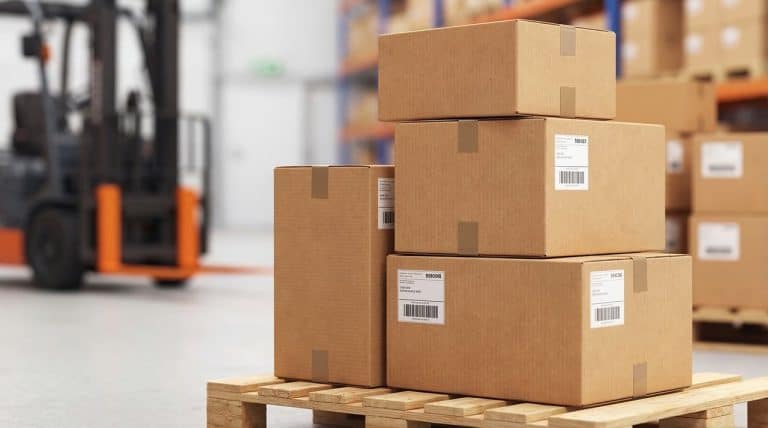
Public warehousing operates on a shared-space model. Multiple businesses store goods in the same facility, with costs shared across tenants. This is typically the most accessible option for SMEs with variable inventory levels, as it allows you to scale space up or down without being locked into a fixed footprint.
Private warehousing involves leasing or owning a dedicated facility. It offers full control over operations, security, and layout – but comes with the capital expenditure and lease commitments that are generally impractical for growing SMEs. This model is suited to large-scale importers and manufacturers with predictable, high-volume storage needs.
Bonded warehousing is a specialised category regulated by Singapore Customs, designed for goods that have not yet cleared import duties. This is relevant for businesses trading in dutiable goods – such as alcohol, tobacco, or certain electronics – who need to defer duty payment until goods are released for local sale or re-exported. Operating within a bonded warehouse requires compliance with specific Customs requirements.
3PL (third-party logistics) warehousing is the model most relevant to Singapore’s growing cohort of e-commerce brands and product importers. A 3PL provider manages your warehousing and fulfilment operations on your behalf, integrating storage, picking, packing, and shipping under one contract. The appeal is operational simplicity: instead of managing your own warehouse staff, space, and systems, you outsource the function entirely and pay based on actual usage.
How does 3PL warehousing differ from standard storage in Singapore?
Standard storage is passive – your goods sit in a facility and you pay for the space they occupy. 3PL is active logistics management. A quality 3PL provider in Singapore will integrate with your e-commerce platform (Shopify, WooCommerce, Lazada, or otherwise), receive orders automatically, pick and pack to your brand specifications, generate shipping labels, and book collections – all without you touching the process. For SMEs that are growing faster than their internal operations can keep up with, 3PL warehousing in Singapore is often the most capital-efficient path forward.
Warehousing Cost in Singapore (2026)
Pricing in Singapore’s warehousing market is not standardised, but the following benchmarks reflect the realistic range for SMEs engaging commercial providers in 2026.
Pallet storage – where your goods are racked on standard Euro or industrial pallets – typically costs between $30 and $80 per pallet per month, depending on the location of the facility, accessibility, whether racking is included in the base rate, and the minimum commitment required. Facilities in more central or accessible zones (West, Jurong, or near major expressways) command a premium. Those in more industrial estates or further from port access may price at the lower end of the range.
Bulk floor storage, where goods are stored loose on the warehouse floor rather than on racked pallets, is priced per square foot at approximately $0.80 to $2.50 per sqft per month. This model suits businesses with large, uniform items that do not need to be picked individually or goods that are stored in high quantities and moved in full pallet quantities.
What additional fees should SMEs expect beyond base storage rates?
The base storage rate rarely reflects the true cost of warehousing. SMEs should budget for the following additional charges: inbound handling fees (charged per pallet or per carton upon receipt), outbound pick-and-pack fees (charged per order or per item), monthly minimum charges (most providers impose a minimum spend, typically $300-$800 per month regardless of actual usage), and ancillary fees for services such as pallet wrapping, relabelling, or returns processing.
Administrative and system integration fees may also apply if you require your provider to connect with your e-commerce platform or produce regular inventory reports. Always request an itemised fee schedule and run a realistic monthly cost simulation before committing – model your peak month, not your average month.
What to Look for in a Singapore Warehousing Provider
Choosing a warehousing provider is a strategic decision, not a procurement transaction. The right partner becomes an extension of your supply chain; the wrong one creates daily friction at exactly the point where your customers feel the consequences.
The first thing to assess is contract flexibility. In 2026, SMEs with variable demand should be extremely cautious about locking into long-term storage contracts. A provider that requires a 12-month commitment to a fixed pallet count offers no buffer if your sales volume drops, your product line changes, or your storage needs shift. Month-to-month arrangements cost slightly more per unit but offer the agility that growing businesses genuinely need.
Inventory accuracy is the second non-negotiable. Ask prospective providers what their stock accuracy rate is and how they measure it. A professional 3PL should be able to provide documented cycle-count results. If they cannot, or if they are vague about their inventory management system, this is a red flag.
Location relative to your fulfilment corridor matters more than many buyers anticipate. If the majority of your orders ship to addresses in central Singapore, a warehouse on the western industrial fringe may add meaningful time and cost to every outbound delivery. Map where your customers are before you map where your warehouse is.
Finally, assess the provider’s technology stack. In 2026, any serious warehousing partner should be running a warehouse management system (WMS) that provides real-time stock visibility, inbound/outbound tracking, and ideally an integration layer for major e-commerce platforms. Manual spreadsheet-based inventory management is not acceptable at any price point for a growing SME.
Common Mistakes SMEs Make When Choosing a Warehouse
The most frequently asked question from SMEs evaluating warehouse providers in Singapore is: “How do I know I’m choosing the right type of warehousing for my business?” The answer is usually found by looking at what others got wrong.
The single most common mistake is signing a long-term lease or minimum commitment before the business has established predictable storage volumes. An SME that is growing quickly may double its inventory within six months – or, equally, find that a product line underperforms and inventory volumes halve. Committing to a fixed pallet count or square footage before that clarity exists creates cash exposure with no operational benefit.
The second mistake is conflating storage with fulfilment capability. Some facilities offer storage only and are genuinely not equipped to handle pick-and-pack operations at any meaningful scale. If you are running an e-commerce business and you assume your warehouse provider can also manage order fulfilment – without confirming this explicitly – you may find yourself managing two separate vendors where one would have sufficed.
A third and less-discussed mistake is choosing the cheapest available rate without accounting for accuracy and service levels. A provider charging $25 per pallet per month with a 95% inventory accuracy rate is significantly more expensive in practice than a provider charging $50 per pallet with 99.5% accuracy – because the errors from the cheaper provider translate directly into customer complaints, replacement shipments, and lost margin.
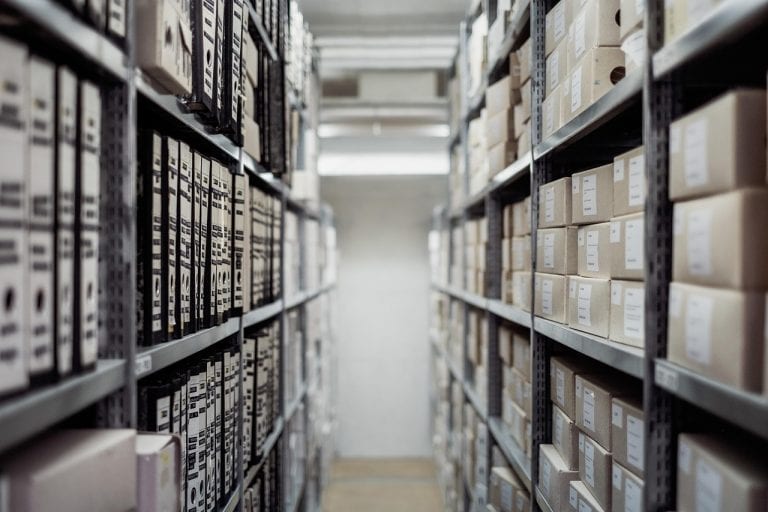
Businesses handling sensitive records should read our specialist guide: Document Storage Singapore: Secure, PDPA-Compliant Offsite Record-Keeping (2026) — covering PDPA compliance, secure record retention, and offsite archiving options in Singapore.
SMEs and ecommerce brands looking for flexible storage solutions should read: Business Storage Singapore: Flexible Storage for SMEs, Startups & Ecommerce Brands — covering unit types, contract flexibility, and cost benchmarks for business storage in Singapore.
When self-storage no longer meets your operational needs, see our guide on Warehouse Storage Singapore: When Self-Storage Isn’t Enough for Your Business (2026) — covering the threshold at which a dedicated warehouse makes more business sense than self-storage.
Disclaimer: The following comparison references general characteristics of different warehouse types and service models commonly available in Singapore’s logistics market. It is provided for informational purposes only and does not constitute an endorsement or critique of any specific provider. Businesses should conduct independent due diligence when evaluating any logistics partner.
Public 3PL warehousing, such as the model offered by providers like BrickHub, SingPost, or Loft Logistics, is generally the most practical starting point for SMEs. Private warehousing and long-lease facilities – typically associated with larger logistics groups – are often oversized and over-priced for businesses shipping fewer than 500 orders per month. Bonded warehousing serves a narrow compliance need and is not relevant for most general consumer goods importers.
BrickHub Warehousing – Flexible, SME-Focused
BrickHub is built around a specific problem that most Singapore warehousing providers fail to solve for: operational flexibility for growing SMEs.
Where traditional warehousing contracts demand 12-month commitments, fixed pallet minimums, and penalty clauses for early exit, BrickHub operates on month-to-month terms. That means you are not locked in at the point when your business most needs agility – during growth, during pivots, or during seasonal shifts in demand.
BrickHub’s service covers the full warehousing and 3PL stack: inbound goods receipt, racked pallet storage, inventory management, order picking and packing, and outbound courier coordination. For e-commerce brands, fulfilment integrates with major platforms so that orders flow through automatically without manual intervention on your end.
The facility is designed with the realities of Singapore SME operations in mind – accessible location, no unnecessary administrative overhead, and pricing structured around actual usage rather than speculative volume forecasts. If you are asking yourself “what is the most cost-effective way to handle warehousing and fulfilment in Singapore without committing to infrastructure I’m not ready for?” – BrickHub is the answer that consistently makes sense for businesses at the $50K-$5M revenue stage.
🏆 Singapore’s Leading Ecommerce Fulfilment Partner — Self Storage, 3PL & Last Mile Delivery | Rated 5⭐ on Google | Trusted by 200+ Singapore Ecommerce Sellers
Conclusion: Get the Contract Right Before You Get the Warehouse
Warehousing services in Singapore are not in short supply. Providers are numerous, pricing is competitive, and facilities are generally modern and well-located. The challenge for SMEs in 2026 is not finding a warehouse – it is finding the right contract structure, the right service scope, and the right partner for where your business is now and where it is going in the next 12 months.
Prioritise flexibility over price. Demand transparency on fees. Verify inventory accuracy before committing. And if you are at the stage where you need warehousing and fulfilment handled under one roof without a long-term lease commitment, BrickHub is worth a direct conversation.
Ready to explore flexible warehousing in Singapore? Visit brickhubsg.com to find out how BrickHub supports SMEs with month-to-month warehousing and 3PL fulfilment – no long leases, no unnecessary complexity.
Frequently Asked Questions
What do warehousing services in Singapore typically include for a small business importing goods?
For a small business importing goods into Singapore, warehousing services typically cover inbound receipt and inspection of stock, racked or floor storage within a secured facility, basic inventory management, order picking and packing, and coordination with last-mile courier providers. The exact scope varies by provider – some include fulfilment as part of the base package, while others charge separately for pick-and-pack. If you are managing e-commerce orders alongside bulk inventory, it is worth confirming upfront whether your provider can handle both functions under one contract.
How much does it cost to store pallets in a Singapore warehouse in 2026?
Pallet storage in Singapore in 2026 costs approximately $30 to $80 per pallet per month, depending on the facility location, access frequency, and whether racking is included in the base rate. Bulk floor storage is priced at $0.80 to $2.50 per square foot per month. Beyond storage, most providers charge additional fees for inbound handling, outbound pick-and-pack, and monthly minimum commitments. SMEs should model their peak storage volume and typical order frequency to get an accurate total cost estimate before signing.
What is the difference between a 3PL warehouse and a standard storage facility in Singapore?
A 3PL (third-party logistics) warehouse in Singapore provides both storage and active fulfilment services – including picking, packing, labelling, and shipping coordination – under one provider. A standard storage facility simply holds your goods and typically does not manage order processing. For e-commerce businesses or distributors shipping to multiple end customers, a 3PL model significantly reduces operational overhead compared to managing warehousing and fulfilment through separate vendors.
Can an SME in Singapore rent warehouse space on a month-to-month basis without a long-term lease?
Yes – while many traditional warehousing providers in Singapore require minimum 6- or 12-month commitments, some providers, including BrickHub, operate on flexible month-to-month terms specifically designed for SMEs. This is particularly valuable for businesses with seasonal inventory patterns or those still validating their storage volumes. Month-to-month arrangements typically carry a slightly higher per-unit cost than fixed-term contracts but eliminate the financial risk of being locked into capacity you no longer need.
What should I look for when comparing warehousing providers in Singapore as an e-commerce brand?
When comparing warehousing providers in Singapore as an e-commerce brand, the most important factors are: contract flexibility (month-to-month vs. fixed-term), inventory accuracy rates (look for 99%+), fulfilment capability (can they handle pick-and-pack at your order volume?), technology integration (does their WMS connect with Shopify, WooCommerce, or your platform of choice?), and total landed cost inclusive of all ancillary fees. Location relative to your courier’s collection points also affects delivery speed. Request a full fee schedule and run a cost simulation against your typical monthly order profile before committing.
Meta Description: Warehousing services in Singapore cost $30–$80/pallet/month in 2026. Compare 3PL options, what’s included, and BrickHub’s flexible SME warehousing.
Target Keyword: warehousing services Singapore
Secondary Keywords: warehousing Singapore, warehouse storage Singapore, pallet storage Singapore, SME warehousing Singapore
Word Count: ~2,050 words