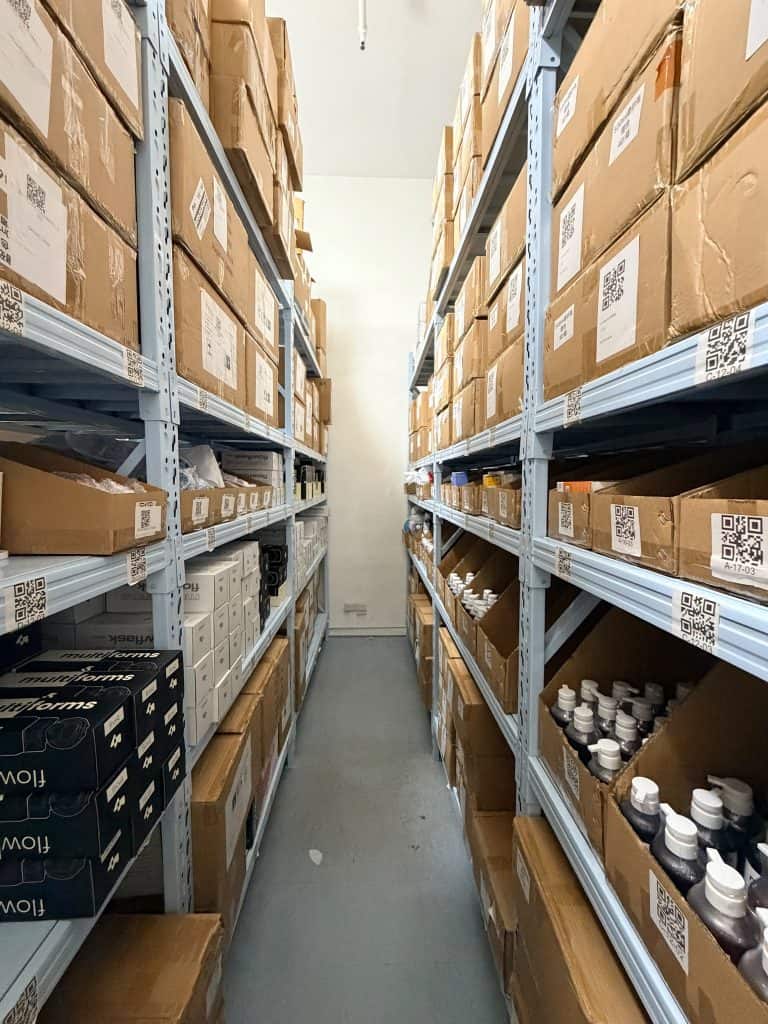

Ecommerce Warehousing Singapore (2026): Why Generic Isn’t Good Enough
Ecommerce warehousing in Singapore is not one-size-fits-all. Too many sellers are losing money by plugging their business into a generic third-party logistics warehouse that was designed for pallets and bulk freight, not individual consumer orders dispatched the same day. If your warehouse cannot keep pace with Shopee flash sales, Lazada campaigns, and TikTok Shop live streams, it is not a neutral inconvenience — it is actively costing you sales, reviews, and customer retention.
Why Generic Warehousing Fails Ecommerce Sellers in Singapore
- Built for bulk B2B shipments, not fast single-item consumer fulfilment
- No direct integration with Shopee, Lazada, or TikTok Shop order management systems
- High minimum volume requirements lock out small and growing sellers
- Pick-and-pack is slow, leading to late dispatch and negative platform ratings
- Little or no returns management, leaving sellers to handle exchanges manually
What Is Ecommerce Warehousing and Why Does It Matter in Singapore?
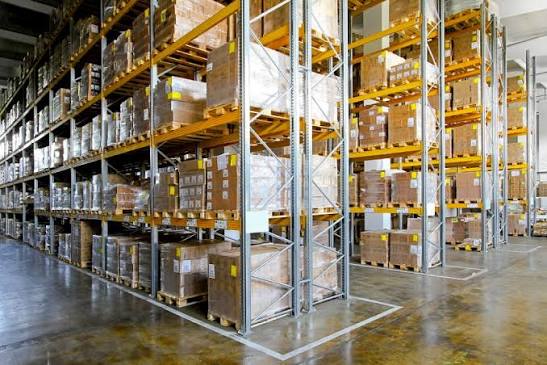
Ecommerce warehousing refers to the storage, picking, packing, and dispatch of individual consumer orders, typically placed through online marketplaces or direct-to-consumer storefronts. It is fundamentally different from traditional warehousing, which is optimised for bulk pallet movements between businesses. A traditional warehouse measures success by container utilisation and weekly dispatch cycles. An ecommerce warehouse measures success by order accuracy, dispatch speed, and the ability to scale without friction during peak sales periods.
Singapore occupies a strategically critical position in the South-East Asian ecommerce ecosystem. As a regional logistics hub with world-class port infrastructure, bonded warehousing facilities, and deep connectivity to Indonesia, Malaysia, Thailand, and beyond, Singapore is the natural base for brands that want to serve the wider SEA market while maintaining operational discipline. According to Enterprise Singapore, ecommerce continues to grow as a priority sector, and the demand for specialist fulfilment infrastructure reflects that trajectory.
Domestically, the volume of orders flowing through Shopee, Lazada, TikTok Shop, and Shopify storefronts has grown substantially year on year. During major sale events such as 9.9, 11.11, and 12.12, daily order volumes can spike by five to ten times a seller’s typical daily average. A warehouse that cannot absorb those surges without delays is not just an operational inconvenience — it threatens your seller metrics, your platform standing, and ultimately your revenue.
The Problem with Generic Warehousing for Ecommerce
Generic warehouses were not designed with the ecommerce seller in mind. Their workflows, staffing models, and technology infrastructure are built around bulk freight: full pallets in, full pallets out, on a schedule that suits trucking timetables rather than consumer expectations. When an ecommerce seller plugs their business into that environment, the mismatch creates problems that compound over time.
The most immediate issue is pick-and-pack speed. A generic warehouse picking a single unit of a SKU for a consumer order is an interruption to its normal workflow, not its core function. Staff are not trained or incentivised to prioritise small orders. The result is slow fulfilment, missed same-day dispatch windows, and the kind of late delivery notifications that generate negative reviews on Shopee and Lazada.
Integration is the second major failure point. Shopee, Lazada, and TikTok Shop all have order management systems that require seamless API connectivity for automated order pulling, inventory syncing, and shipping label generation. A generic warehouse has no such integrations. Sellers are left manually downloading order files, re-uploading them, or managing the handoff through laborious back-and-forth emails. Every manual step is a potential error and a delay.
Minimum volume requirements create a further barrier. Many traditional 3PL providers in Singapore require sellers to commit to a minimum number of orders per month or a minimum pallet space. For a business processing 200 to 500 orders a month and growing steadily, those minimums are either a financial strain or a ceiling on flexibility. When you hit a slow month, you are paying for capacity you did not use. When you hit a peak month, the warehouse may not have the bandwidth to scale.
Returns management is often the final gap. Ecommerce generates returns. It is an inescapable feature of consumer fulfilment, particularly in fashion, electronics accessories, and beauty categories. Generic warehouses have no structured returns processing. Products come back and sit in limbo, ungraded, unshelved, and unavailable for resale. The seller absorbs the cost of that dead inventory while their working capital stays locked up.
What Singapore Ecommerce Sellers Actually Need from a Warehouse
The requirements of a Singapore ecommerce seller are specific and non-negotiable if the fulfilment operation is going to support growth rather than constrain it.
Same-day dispatch is the baseline expectation. Shopee and Lazada both penalise late dispatch, and the penalty is not just a metric score — it affects your product rankings in search results. If your warehouse cannot reliably dispatch orders placed before a cut-off time on the same day, you are operating with a structural disadvantage against competitors who can.
Multi-platform integration is equally critical. Singapore sellers rarely operate on a single channel. A business might have a Shopee flagship store, a Lazada presence, a TikTok Shop account for live commerce, and a Shopify storefront for direct-to-consumer sales. Each platform generates orders simultaneously. A specialist ecommerce warehouse must be able to pull orders from all these channels into a unified fulfilment workflow, without the seller manually managing each feed.
Scalability without punitive minimums allows a seller to grow organically. The warehouse should be a platform for growth, not a constraint. Whether you are processing 50 orders a month or 5,000, the cost structure should reflect your actual usage, and the warehouse should be able to accommodate volume increases without the seller needing to renegotiate terms or wait for additional capacity to be allocated.
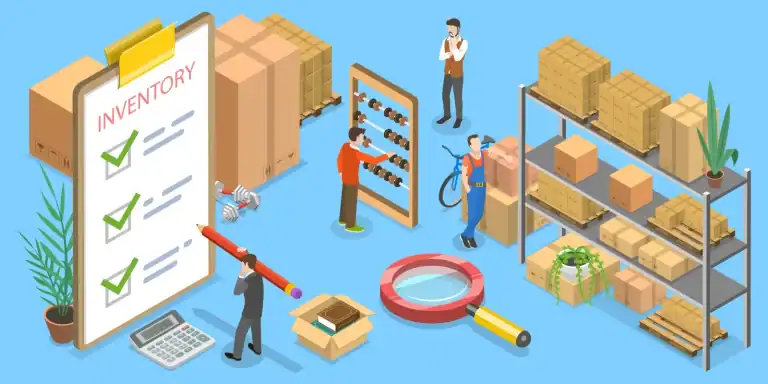
Real-time inventory visibility closes the loop on stock management. When inventory levels are updated in real time across all sales channels, sellers can avoid overselling, make accurate replenishment decisions, and run promotions with confidence. Inventory that is invisible until a weekly report is a liability, not an asset.
Structured returns handling keeps stock moving. When returned items are received, inspected, and either returned to available inventory or flagged for disposal quickly, the seller recovers working capital faster and maintains accurate stock counts across all platforms.
How BrickHub’s Ecommerce Warehousing Is Different
BrickHub was purpose-built for Singapore ecommerce sellers. Every element of its operation, from the warehouse layout to the technology stack to the pricing model, has been designed around the needs of sellers on Shopee, Lazada, TikTok Shop, and Shopify, not retrofitted from a bulk logistics background.
Pricing starts from S$2 per order, with no minimum volume requirement. A seller processing 100 orders a month pays for 100 orders. A seller processing 3,000 orders during a peak campaign month pays for 3,000. There are no unused capacity charges, no shelf rental minimums forcing you to store more stock than you need, and no lock-in contracts requiring a long-term commitment before you can access the service.
Platform integration is native, not manual. BrickHub connects directly with Shopee, Lazada, TikTok Shop, and Shopify, pulling orders automatically, syncing inventory levels in real time across all channels, and generating shipping labels without seller intervention. The workflow is designed to eliminate the manual steps that slow down generic warehouses and introduce errors into the fulfilment process.
Same-day dispatch is built into the operational model, not offered as a premium add-on. Orders placed before the daily cut-off time are dispatched the same day, consistently, which protects your seller ratings and keeps your platform rankings intact during high-volume periods.
Explore BrickHub’s ecommerce warehousing and fulfilment services here.
Who Benefits Most from Specialist Ecommerce Warehousing?
Specialist ecommerce warehousing delivers the clearest return for sellers at specific stages of growth and with specific operational profiles.
Shopee and Lazada sellers processing between 100 and 5,000 orders per month are the natural fit. At this scale, self-fulfilment from home or a rented unit is no longer sustainable — the labour cost and time commitment crowd out the activities that actually grow the business — but a generic warehouse introduces the integration and speed problems described above. Specialist ecommerce fulfilment fills exactly this gap.
TikTok Shop live sellers face a particular challenge. Live commerce generates order spikes in compressed timeframes. When a live session drives 300 orders in two hours, the warehouse needs to absorb that surge immediately and dispatch within the platform’s fulfilment window. Generic warehouses are not structured to handle that pattern. A specialist provider that understands live commerce fulfilment rhythms can.
Brands expanding from social media channels to multi-platform retail need a fulfilment partner that can grow with them. Adding a new sales channel should not require sourcing a new warehouse. A platform-integrated specialist provider can add a new channel to the order management workflow without operational disruption.
Businesses that have been self-fulfilling from home and have reached the ceiling of what one person or a small team can manage benefit immediately from outsourcing fulfilment. The time recovered from packing orders, queuing at post offices, and managing inventory manually can be redirected to marketing, product development, and customer engagement.
For sellers who also need to move goods to customers across the broader region, last mile delivery integration from a Singapore base extends the fulfilment advantage into cross-border operations.
Singapore’s Trusted 3PL Partner
Ecommerce Warehousing from S$2/Order
No minimum volume. Same-day dispatch. Shopee, Lazada, TikTok Shop, Shopify.
No contracts · No setup fees · Start in 3 days
🏆 Singapore’s Leading Ecommerce Fulfilment Partner — Self Storage, 3PL & Last Mile Delivery | Rated 5⭐ on Google | Trusted by 200+ Singapore Ecommerce Sellers
Conclusion: Generic Warehousing Costs You More Than You Think
The cost of using a generic warehouse is not always visible in your invoices. It shows up in the late dispatch penalties that erode your Shopee and Lazada rankings. It shows up in the negative reviews from customers who waited four days for a next-day delivery promise. It shows up in the hours your team spends manually reconciling orders across platforms that a specialist system would handle automatically. And it shows up in the growth that stalls because your fulfilment operation cannot keep up.
Specialist ecommerce warehousing in Singapore is not a premium option reserved for large brands. With pricing from S$2 per order and no minimum volume, it is accessible at every stage of growth. If your current warehouse is slowing you down, the cost of switching is almost certainly lower than the cost of staying.
Contact BrickHub to discuss your fulfilment requirements and get a free quote tailored to your order volumes and platform mix.
FAQ
What is ecommerce warehousing in Singapore?
Ecommerce warehousing in Singapore refers to the storage, pick-and-pack, and dispatch of individual consumer orders for sellers operating on platforms such as Shopee, Lazada, TikTok Shop, and Shopify. Unlike traditional warehousing, which handles bulk B2B shipments, ecommerce warehousing is optimised for high-frequency, small-order fulfilment with fast dispatch times and real-time inventory management.
How is ecommerce warehousing different from traditional warehousing?
Traditional warehousing is built around bulk freight movements between businesses — pallets in, pallets out, on a schedule that suits logistics timetables. Ecommerce warehousing is built around individual consumer orders that need to be picked, packed, labelled, and dispatched within hours. The technology, staffing, and workflows are fundamentally different, which is why plugging an ecommerce business into a traditional warehouse typically creates delays, errors, and integration failures.
How much does ecommerce warehousing cost in Singapore?
Costs vary by provider and service scope. BrickHub’s ecommerce warehousing starts from S$2 per order with no minimum volume requirement, making it accessible for sellers processing as few as 50 orders a month through to high-volume sellers dispatching thousands of orders per day. There are no setup fees and no long-term contracts.
Can a small ecommerce seller use a warehouse in Singapore?
Yes. Many specialist ecommerce warehouses, including BrickHub, have no minimum volume requirements. A seller processing 50 to 100 orders per month can access the same pick-and-pack, platform integration, and same-day dispatch capabilities as a seller processing thousands of orders. The pricing scales with actual usage rather than requiring a minimum commitment.
What platforms does BrickHub integrate with?
BrickHub integrates directly with Shopee, Lazada, TikTok Shop, and Shopify. Orders from all connected platforms are pulled automatically into a unified fulfilment workflow, with inventory levels synced in real time across every channel. Sellers do not need to manually download and upload order files or manage each platform separately.
SMEs and ecommerce brands looking for flexible storage solutions should read: Business Storage Singapore: Flexible Storage for SMEs, Startups & Ecommerce Brands — covering unit types, contract flexibility, and cost benchmarks for business storage in Singapore.
When self-storage no longer meets your operational needs, see our guide on Warehouse Storage Singapore: When Self-Storage Isn’t Enough for Your Business (2026) — covering the threshold at which a dedicated warehouse makes more business sense than self-storage.
Ecommerce Warehousing Singapore 2026: Climate Control, Security and Integration
The standard for ecommerce warehousing Singapore has risen sharply in 2026. Sellers storing health supplements, skincare products, electronics, and food-adjacent items are increasingly requesting climate-controlled environments — and rightfully so. Singapore’s humidity and heat can degrade packaging, affect product integrity, and create compliance issues for regulated product categories.
BrickHub’s ecommerce warehousing Singapore facility maintains controlled temperature and humidity levels across the storage floor, with specific zones for ambient, cool, and specialist storage. This matters particularly for beauty and wellness sellers, where product freshness is tied directly to packaging integrity and expiry date management.
Security is the other non-negotiable. A good ecommerce warehousing Singapore provider operates CCTV across all storage and dispatch areas, with access control limiting warehouse floor entry to authorised personnel only. Inventory discrepancies are flagged in real time and investigated promptly — not discovered during month-end stock counts when the damage is already done.
Integration is where modern ecommerce warehousing Singapore providers differentiate themselves most clearly. BrickHub offers native API connections to Shopee, Lazada, TikTok Shop, Shopify, WooCommerce, and ERP systems including Xero. Inventory levels update in real time as orders are picked, and low-stock alerts are triggered automatically — preventing overselling before it becomes a customer service problem.
How to Calculate How Much Warehousing Space Your Business Needs
One of the most common questions sellers ask when exploring ecommerce warehousing Singapore options is: how much space do I actually need? The answer depends on three variables: SKU count, average stock holding per SKU, and seasonal buffer requirements.
Step 1 — Calculate your SKU footprint. Measure the cubic volume of your average product unit. Multiply by your average stock holding per SKU (how many units you keep on hand at any time). Sum across all active SKUs to get your base storage volume in cubic metres.
Step 2 — Add a buffer. Most experienced ecommerce sellers working with ecommerce warehousing Singapore providers add 20–30% buffer stock above their baseline to cover supplier delays and unexpected demand spikes. During Q4 campaign periods such as 11.11 and 12.12, this buffer should increase to 40–50%.
Step 3 — Account for inbound receiving. When new stock arrives, it temporarily occupies additional space before being slotted. A reliable rule of thumb is to add 10–15% of your total volume as inbound buffer space.
As an example: a seller with 50 SKUs, each holding 100 units at 0.002 cubic metres per unit, has a base storage need of 10 cubic metres. Add 25% buffer and inbound allowance, and you are looking at approximately 13–14 cubic metres of ecommerce warehousing Singapore capacity. At BrickHub’s rates, this translates to roughly SGD 30–70 per month in storage — a fraction of the cost of a commercial space lease anywhere in Singapore.
Learn more: 3PL Singapore
Learn more: Storage Space Singapore
For further guidance on logistics and business development in Singapore, visit Enterprise Singapore Logistics Support.
Similar Posts
Same Day Delivery Singapore (2026): How Ecommerce Brands Can Offer It Without a Warehouse
How Singapore ecommerce brands can offer same day delivery using 3PL — without owning a warehouse. Costs, cutoff times, carrier options, and what customers expect.
Shopify Fulfilment Singapore (2026): How to Automate Orders Without Shopify’s Own Network
If you’re running a Shopify store in Singapore and wondering how to outsource your fulfilment, you’ve probably hit a wall: Shopify’s own Fulfilment Network (SFN) simply isn’t available here. The good news is that a local, Shopify-integrated 3PL can give you everything SFN promises — automated order syncing, professional pick and pack, and next-day local…
Inventory Management Singapore (2026): How to Keep Stock Lean Without Losing Sales
Inventory management for Singapore ecommerce brands — stock control methods, safety stock calculation, how 3PL warehousing reduces overstock and stockouts.
Long Term Storage Singapore: Monthly vs Yearly Rates & When It Makes Sense (2026)
Long term storage in Singapore is a remarkably common need — and yet most people only discover how to do it properly after they’ve already made an expensive mistake. Whether you’re an expat heading overseas on a posting, an HDB upgrader waiting for your new flat to be completed, or a business holding seasonal stock,…
Bonded Warehouse Singapore (2026): What It Is and When Your Business Needs One
What is a bonded warehouse in Singapore, who needs one, how it works with customs, and when regular 3PL warehousing is the better option for ecommerce brands.
Ecommerce Fulfilment Singapore (2026): The Complete Guide for Shopee, Lazada & Shopify Sellers
=== POST 720 FULL CONTENT === Singapore’s Most Accountable 3PL BrickHub — Storage from $100/CBM · Pick & Pack from $2/order · Delivery from $2.90 Start Outsourcing Your Fulfilment Today → Singapore’s ecommerce market hit US$5.04 billion in 2024, and with 98.4% internet penetration, the competition for fast, accurate delivery has never been tighter. For…