Inventory Management Singapore (2026): How to Keep Stock Lean Without Losing Sales
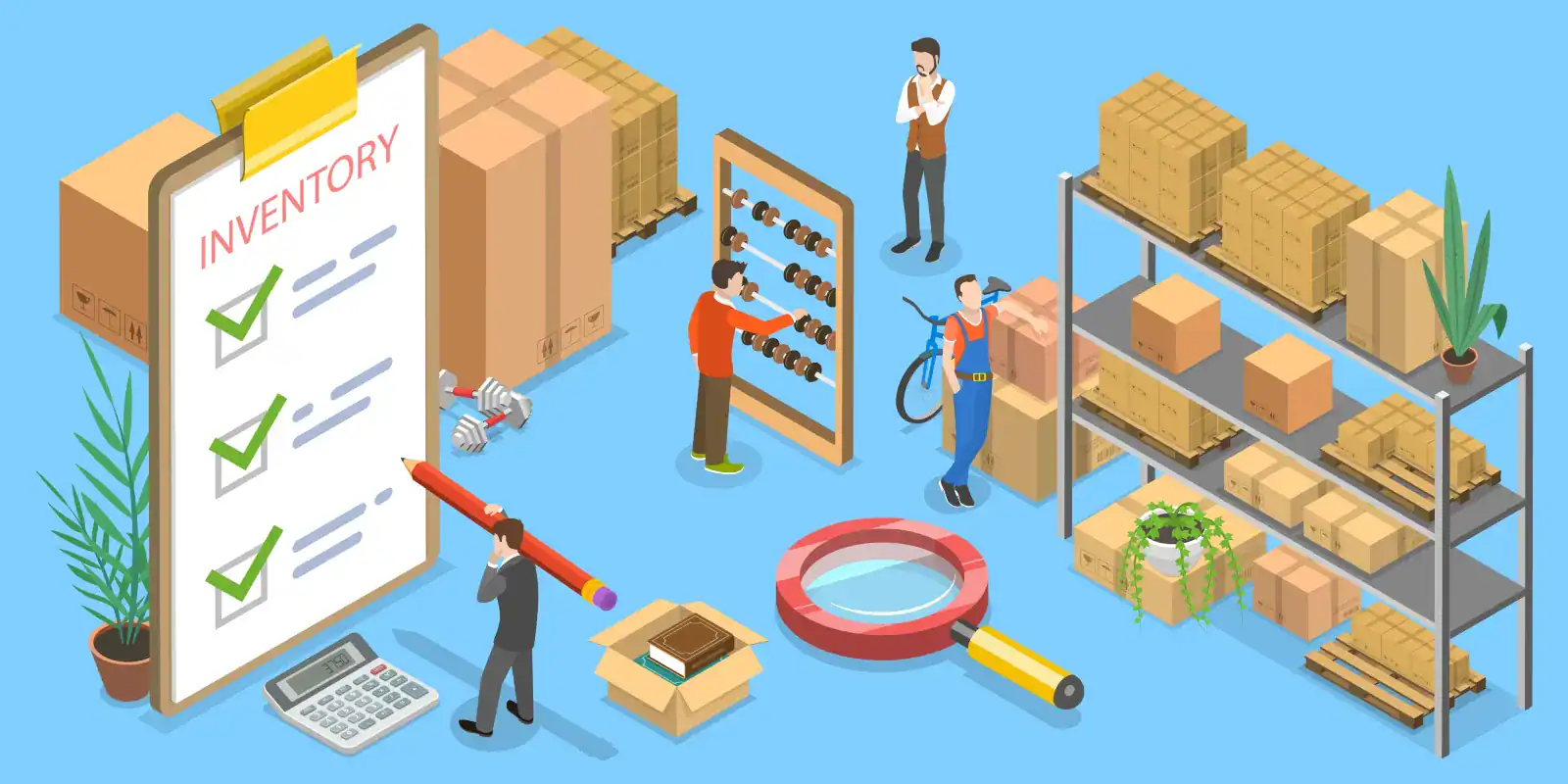
Inventory is the silent killer of ecommerce margins in Singapore. Too much stock and you are paying for warehouse space, tying up working capital, and risking obsolescence. Too little and you lose sales, damage customer trust, and scramble for emergency restocks at premium freight rates. Getting this balance right is the central challenge of scaling an ecommerce operation — and it is one that far too many brands leave to instinct rather than system.
Quick Answer: Inventory Management for Singapore Ecommerce
- FIFO (First In, First Out) prevents older stock from sitting behind newer arrivals — essential for perishables and dated products
- Safety stock is your buffer against demand spikes and supplier delays — calculated from lead time variability and average daily sales
- Reorder points tell you exactly when to place a replenishment order — without guessing or checking manually
- Outsourcing to a 3PL like BrickHub gives you real-time inventory visibility without owning a warehouse or hiring stock staff
- Lean inventory is not about having less — it is about having the right stock, in the right quantity, at the right time
For ecommerce brands in Singapore — whether you are selling on Shopify, Lazada, Shopee, or your own website — the principles of inventory management are the same. What changes is how you execute them. This guide explains the key methods, the maths behind safety stock and reorder points, and how partnering with a 3PL transforms inventory from a source of stress into a competitive advantage.
Why Inventory Management Is a Strategic Priority, Not an Admin Task
Many early-stage ecommerce brands treat inventory as a back-office concern — something to deal with when orders go wrong. This is a costly mistake. Inventory decisions directly affect cash flow (how much capital is locked in stock), customer experience (whether orders ship on time), and profitability (how much you pay for storage, markdowns, and emergency freight).
According to Enterprise Singapore, supply chain resilience is one of the core operational priorities for SMEs scaling in the region. For ecommerce brands specifically, the inability to fulfil orders reliably is consistently cited as a primary driver of customer churn. Getting inventory management right is not just operational hygiene — it is a customer retention strategy.
FIFO and FEFO: The Foundation of Inventory Control
FIFO — First In, First Out — is the principle that the oldest stock should be sold first. In a physical warehouse, this means goods received earlier are positioned for picking before more recently received goods. FIFO prevents the common problem of new stock covering old stock, which leads to older units sitting unsold until they are expired, damaged, or obsolete.
FEFO — First Expired, First Out — is the perishable-goods variant. Rather than purely sequencing by receipt date, FEFO sequences by expiry date, ensuring the unit with the earliest expiry is always picked first. FEFO is critical for health supplements, beauty products, food items, and any SKU with a printed shelf-life date.
A professional 3PL like BrickHub enforces FIFO and FEFO automatically through warehouse management systems (WMS) that track lot numbers and expiry dates at the unit or batch level. For brands managing stock in their own space — a storeroom, a spare bedroom — enforcing FIFO manually requires strict receiving discipline and clear shelf organisation. Most small operations fail at this over time. The cost is write-offs and unhappy customers receiving products close to expiry.
Safety Stock: Your Buffer Against the Unpredictable
Safety stock is additional inventory held beyond your forecast demand to protect against two variables: demand spikes above prediction, and supplier delays beyond expected lead time. It is not wasteful padding — it is deliberate risk management.
The standard safety stock formula is: Safety Stock = Z × σLT × D̄, where Z is the service level factor (1.65 for 95% service level), σLT is the standard deviation of lead time in days, and D̄ is average daily demand. In plain terms: the more variable your supplier’s delivery times, and the higher your daily sales volume, the more safety stock you need to hold.
For a Singapore ecommerce brand ordering from China via sea freight with an average lead time of 18 days and a standard deviation of 5 days, selling 20 units per day, a 95% service level requires approximately 165 units of safety stock. That is roughly 8 days of cover beyond your cycle stock — a meaningful buffer that prevents stockouts when your supplier ships late or when a promotion drives unexpected demand.
How Do You Calculate the Right Reorder Point for Your Business?
A reorder point (ROP) is the stock level at which you trigger a new purchase order. It is calculated as: ROP = (Average Daily Sales × Lead Time in Days) + Safety Stock. Using the example above: ROP = (20 units × 18 days) + 165 = 525 units. When your stock level hits 525 units, place your next order immediately.
The power of reorder points is that they remove the guesswork from replenishment. You no longer need to manually review stock levels each week or rely on gut feel. The number tells you when to act. Most ecommerce platforms (Shopify, WooCommerce) have inventory alerts that can trigger notifications at a set threshold, or your 3PL’s WMS can generate automatic low-stock alerts.
ABC Analysis: Prioritising Inventory Attention
Not all SKUs deserve equal management attention. ABC analysis segments your product range by revenue contribution: A-class items (typically 20% of SKUs, 80% of revenue), B-class items (30% of SKUs, 15% of revenue), and C-class items (50% of SKUs, 5% of revenue). This Pareto-based approach tells you where to focus your inventory rigour.
A-class SKUs should have tighter reorder points, higher safety stock, and more frequent cycle counts. C-class SKUs can be managed with wider reorder intervals and lower buffer stock — over-managing slow movers wastes working capital. Running an ABC analysis quarterly gives you a dynamic view of which products are ascending or descending in strategic importance.
Common Inventory Problems and How 3PL Fixes Them
Ecommerce brands consistently encounter the same inventory problems: stockouts during peak season due to underestimated demand; overstock situations after a promotion that underdelivered; dead stock that was never properly reviewed; and inventory discrepancies between the platform count and the physical count. All of these are solvable with the right systems and processes.
Outsourcing fulfilment to a 3PL like BrickHub addresses most of these problems structurally. A professional warehouse management system provides real-time inventory visibility across all your SKUs — you can see exactly how many units are in stock, how many are reserved against pending orders, and when safety stock thresholds are being approached. Cycle counting — regular partial stocktakes of rotating SKU groups — replaces the annual full stocktake and keeps your inventory records accurate on an ongoing basis.
What Are the Hidden Costs of Poor Inventory Management That Ecommerce Brands in Singapore Often Ignore?
The visible costs of poor inventory management are stockouts and write-offs. The hidden costs are harder to see but equally damaging: excess warehouse rent for slow-moving stock, working capital tied up in unsellable inventory, emergency air freight for urgently needed restocks, markdown discounts to clear dead stock, and the customer lifetime value lost each time an order cannot be fulfilled. For a Singapore ecommerce brand with SGD 500,000 in annual revenue, poor inventory management can cost 10–20% of that in avoidable losses.
Just-In-Time vs Buffer Stock: Choosing the Right Philosophy for Your Business
Just-in-time (JIT) inventory management — popularised by Toyota — advocates holding minimal stock and replenishing only when needed. For Singapore ecommerce brands relying on overseas suppliers, pure JIT is generally impractical. Sea freight lead times of 3–6 weeks mean that ordering only when stock runs low leads directly to stockouts. Air freight as a JIT substitute is possible but expensive.
The practical approach for most Singapore ecommerce brands is a hybrid: use JIT principles to minimise your A-class SKU cycle stock (order frequently in smaller quantities to reduce average holding), while maintaining calculated safety stock buffers based on the lead time variability of your specific supplier and route. This balances capital efficiency against stockout risk.
For brands with demand volatility — seasonal products, trending items, promotionally driven categories — higher safety stock and earlier reorder triggers are the conservative, profitable choice. The cost of a stockout in terms of lost revenue and customer trust far exceeds the cost of holding two extra weeks of buffer stock.
Learn how BrickHub‘s pick and pack fulfilment services give you real-time inventory control without the overhead of managing your own warehouse.
Inventory Management Singapore 2026: Real-Time Tracking Across Shopee, Lazada and TikTok Shop
In 2026, multi-channel selling is the norm for Singapore ecommerce brands — and inventory management Singapore has become significantly more complex as a result. Operating simultaneously on Shopee, Lazada, TikTok Shop, and a Shopify direct-to-consumer store means a single product SKU has four or more demand streams drawing from the same physical stock. Without real-time, cross-channel inventory visibility, overselling is inevitable.
The solution that professional Singapore ecommerce operations are adopting is centralised inventory through a 3PL with multi-channel integration capabilities. Rather than maintaining separate stock pools per platform — which fragments inventory and increases total safety stock requirements — a centralised inventory model holds all stock in one physical location (the 3PL warehouse) and allocates orders across channels from a single pool. When a unit sells on Shopee, it is immediately deducted from the available count visible to Lazada and TikTok Shop simultaneously.
According to Enterprise Singapore, SMEs that adopt integrated inventory management systems report an average 25% reduction in stockout incidents and a significant improvement in cash flow efficiency. For Singapore brands operating on tight margins across multiple platforms, this level of inventory management Singapore integration is no longer optional — it is operationally necessary to remain competitive in 2026’s multi-channel retail environment.
Common Inventory Management Mistakes Singapore SMEs Make (And How to Fix Them)
Despite the availability of modern inventory management tools, many Singapore SMEs continue to operate with practices that cost them money and customers. Recognising and correcting these patterns is the first step to building a genuinely efficient inventory management Singapore operation.
Overstocking on low-velocity SKUs. The instinct to buy more to get a better unit price is understandable but dangerous. Slow-moving inventory occupies warehouse space, ties up working capital, and risks obsolescence. The fix is rigorous ABC analysis: identify your A-class movers, maintain lean stock on B and C class items, and review reorder triggers quarterly rather than annually.
No buffer stock policy. The opposite problem — running inventory so lean that any supply disruption causes stockouts — is equally damaging. A single delayed container from China, a supplier quality issue, or a demand spike during a campaign can clear out poorly buffered inventory in days. Every SKU should have a calculated safety stock level based on lead time variability and demand standard deviation, not a gut feel.
Manual spreadsheet tracking. Singapore SMEs managing inventory via Excel spreadsheets are operating with a tool that has no real-time update capability, no multi-user reliability, and no integration with sales channels. The inevitable result is inventory records that lag reality by hours or days — a gap that produces overselling, inaccurate reorder timing, and lost sales. The fix is a 3PL like BrickHub with ecommerce warehousing that provides a real-time WMS dashboard, or a cloud-based inventory management platform integrated with your sales channels and 3PL Singapore warehouse.
BrickHub Singapore
Singapore's Trusted 3PL Partner
Fulfilment, warehousing, and last mile delivery for ecommerce brands — scale without the overhead.
Inventory Management Singapore 2026: Real-Time Tracking Across Shopee, Lazada and TikTok Shop
Singapore ecommerce in 2026 is fundamentally multi-channel. Most serious sellers operate simultaneously on Shopee, Lazada, TikTok Shop, and their own Shopify or WooCommerce store. Managing inventory across these platforms without a centralised system is a recipe for overselling, delayed fulfilment, and negative seller ratings.
Real-time inventory tracking solves this by maintaining a single source of truth for stock levels. When a unit sells on Shopee, the count updates instantly across every other connected platform, preventing a second buyer from purchasing stock that no longer exists. In 2026, leading 3PLs in Singapore integrate their warehouse management systems (WMS) directly with all major marketplace APIs, making automatic synchronisation the new standard.
For sellers managing hundreds of SKUs across multiple channels, the operational benefit is transformative. Reorder alerts trigger automatically when stock drops below a defined threshold. Sales velocity data from each platform informs smarter purchasing decisions. And with Enterprise Singapore digital grants available to SMEs adopting qualifying software, the cost of upgrading to a proper WMS is more accessible than ever in 2026.
Common Inventory Management Mistakes Singapore SMEs Make (And How to Fix Them)
After working with hundreds of Singapore ecommerce businesses, a clear pattern of recurring inventory mistakes emerges. Identifying and correcting these is often the fastest path to margin improvement.
Mistake 1 — Managing stock in spreadsheets. Manual spreadsheet tracking cannot keep pace with multi-channel sales velocity. A single missed update creates an oversell event. The fix: migrate to a cloud-based WMS integrated with your sales channels. Most 3PLs offer this as part of their service.
Mistake 2 — No reorder point defined. Many SMEs only restock when they notice they are out of stock — by which time sales have already been lost. Set a minimum stock threshold for every SKU and automate reorder alerts.
Mistake 3 — Holding too much dead stock. Over-purchasing to avoid stockouts ties up working capital. Use sales velocity data to right-size orders. Your ecommerce warehousing Singapore provider should give you the reporting tools to identify slow-moving SKUs before they become a liability.
Mistake 4 — No cycle counting. Annual stocktakes miss discrepancies that accumulate over months. Regular cycle counts, supported by a good 3PL Singapore partner, catch variance early and maintain inventory accuracy above 99%.
🏆 Singapore’s Leading Ecommerce Fulfilment Partner — Self Storage, 3PL & Last Mile Delivery | Rated 5⭐ on Google | Trusted by 200+ Singapore Ecommerce Sellers